
A Safe Place Today.
A Pathway Home Tomorrow.
Housing Pathway Initiative uses rapid-deploy modular microshelters as a bridge from homelessness to permanent housing — not as the final solution, but as the safe, private, stable first step on a complete path home.
One Microshelter. Two Ways to Build a Community. The same modular units deploy outdoors on land or indoors inside warehouses.
From crisis to permanent housing
This is not a collection of tiny shelters. It is a complete pathway — each step designed to move a person from immediate crisis into a permanent home.
- 1Housing Crisis
A person loses stable housing.
- 2Safe Microshelter
Privacy, safety, and stability.
- 3Stabilization
Health, rest, and grounding.
- 4Housing Plan
Navigator builds a path.
- 5Barrier Removal
Clear the obstacles.
- 6Permanent Housing
Move into a home.
- 7Housing Retention
Stay housed for good.
One Microshelter. Two Ways to Build a Community.
The same modular microshelters deploy outdoors on suitable land or indoors inside warehouses and large commercial buildings — whichever fits your site, climate, and community.
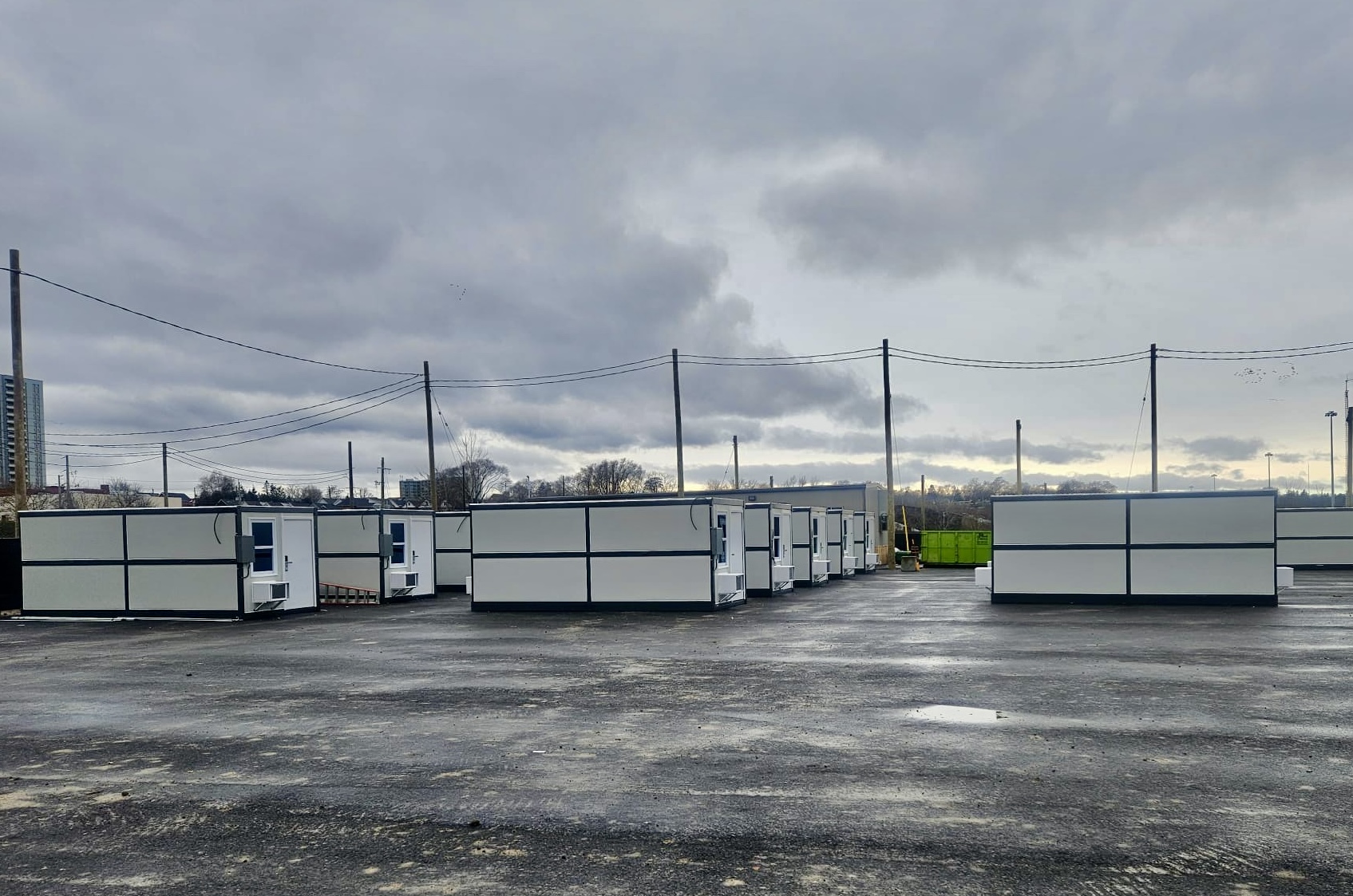 Outdoor
Outdoor Micro Communities
- Microshelters arranged in organized clusters on suitable land
- Walkways, shared services, bathrooms, showers, laundry
- Case management, healthcare access, employment resources
- Security and housing navigation on site
 Indoor
Indoor Micro Communities
- Same microshelters installed inside warehouses or large buildings
- A protected indoor neighborhood — not a cot shelter
- Private modular units, wide walkways, smaller clusters
- Greenery, community space, services, and housing navigation
Prevent → Shelter → Stabilize → Navigate → Remove Barriers → Permanent Housing → Support
Seven connected stages. Microshelters are the bridge in the middle — providing privacy, safety, and stability while residents work toward permanent housing.
Prevent
Stop homelessness before it starts
Rental assistance, eviction diversion, landlord mediation, and early intervention keep people housed before crisis hits.
Shelter
A safe, private place tonight
Rapid-deploy modular microshelters provide privacy, safety, and dignity — not a cot in a crowded room.
Stabilize
Health, rest, and grounding
Residents stabilize physically and mentally with climate control, secure storage, meals, and access to healthcare.
Navigate
A housing plan with a navigator
Each resident works with a housing navigator to build a personalized plan toward permanent housing.
Remove Barriers
Clear the path to housing
Case managers resolve ID, credit, legal, employment, and behavioral-health barriers blocking housing placement.
Permanent Housing
Move into a home
Rapid rehousing, vouchers, affordable units, and supportive housing move residents into permanent homes.
Support
Stay housed for good
Ongoing case management, landlord partnerships, and retention support prevent a return to homelessness.
Microshelters are not the final solution. They provide privacy, safety, and stability while residents work toward permanent housing.
The 90-Day Housing Framework
A structured, time-bound framework that keeps residents, navigators, and case managers focused on a clear path to permanent housing.
The 90-day framework is an accountability tool, not an automatic eviction deadline.
Intake, health screening, rest, and immediate needs. Establish trust and a navigator relationship.
Resolve ID, documents, legal, employment, and behavioral-health barriers blocking housing.
Navigator activates housing search: rapid rehousing, vouchers, affordable units, landlord outreach.
Escalate any unresolved barriers to specialized teams so no one stalls without a path forward.
Designed for the people who need a safe, private path home
People currently homeless
Unsheltered or in unsafe congregate settings.
People at risk of homelessness
Facing eviction or housing loss.
Families with children
Need privacy and stability together.
Veterans
Coordinated with veteran-specific services.
Domestic-violence survivors
Safe, private, secure units.
Hospital discharge
Medical respite and recovery.
What success looks like
Illustrative sample metrics for planning and conversation. Real data will replace these once programs launch.
These are placeholder sample metrics. We do not publish invented statistics. The dashboard will display verified program data once communities are operational.
This is not a collection of tiny shelters. It is a complete pathway from crisis to permanent housing.
Help Build the Pathway Home.
Final capacity and development feasibility require professional architecture, engineering, zoning, fire-code, building-code, and accessibility review.