About & Research
The mission, civic leadership, and peer-reviewed neuroscience grounding the Housing Pathway Initiative, alongside verified national case studies and transparent data outcomes.
A civic development standard for transitional shelter
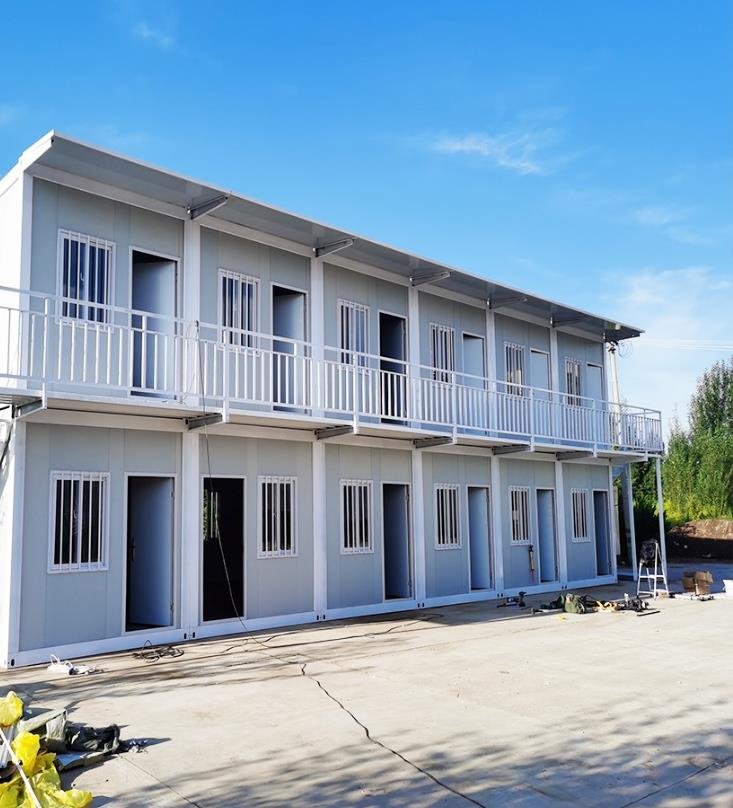
The Housing Pathway Initiative bridges the critical divide between crisis homelessness and permanent independence. By deploying rapid-assembly, private modular microshelters in structured outdoor villages and converted indoor warehouses, we provide the safety, dignity, and predictability individuals need to successfully rebuild their lives.
We operate with rigorous accountability, trauma-informed principles, and an unwavering focus on permanent housing placement. Microshelters are never marketed as the final solution; they are the physical infrastructure that restores personal agency.

Leadership & Governance
Founder: Carey Ann George
Founded by Carey Ann George, founder of JC Operating Systems.
Contact: carey@jcconsultancy.biz
Additional advisory board members and nonprofit governance details will be published as regional pilot sites proceed through civic review.
Supporters
People supporting the pathway
Cuyahoga County Judge Antonio Nicholson
Cleveland Municipal Court
Supporter of the Housing Pathway Initiative.
The Science of Stability
Before someone can rebuild a life, the brain has to believe it is safe enough to try.
Safety Creates Bandwidth
Under prolonged survival threat, the nervous system prioritizes immediate defense over distant goals. A lockable door, acoustic privacy, and undisturbed sleep restore prefrontal executive function needed for housing applications and employment.
Controllability Restores Agency
Learned helplessness occurs when effort is uncoupled from outcomes. Giving a resident their own key, belongings security, and achievable daily steps re-establishes the fundamental Action → Result circuitry required for sustained goal-directed behavior.
Regulation Before Reintegration
Physiological state directly influences behavior. Calming hypervigilance through predictable routines, quiet spaces, and voluntary recovery tools creates the nervous system baseline necessary to engage caseworkers and succeed in permanent housing.
National Case Studies in Transitional Micro Communities
Verified public news reporting and academic evaluations from across the country demonstrating how non-congregate micro communities outperform traditional congregate shelters.
North End Tiny Home Village
Tacoma News Tribune
A 40-unit village described as a 'good proof of concept' that made gains against homelessness, outperforming traditional shelters in the comparison cited by the paper.
North Haven Tiny Home Village
Bellingham Herald
A 47-unit community where residents said it saved them, reporting an approximately 70% rehousing rate into permanent housing after its first year.
Unity Village
Bellingham Herald
An earlier 23-home village on city-owned property reported an approximately 58% rehousing rate into permanent housing.
Regional Tiny-House Villages (LIHI)
Capitol Hill Seattle News
LIHI's regional tiny-house villages served more than 1,650 people in 2025, with 55% transitioning into permanent or transitional housing. Seattle announced 100+ additional tiny houses in 2025.
Safe Rest Villages
Axios Portland
County data showed that a majority of people exiting the three operating Safe Rest Villages had moved into permanent or temporary housing.
Village & Motel Shelters (PSU study)
Axios Portland
A Portland State University evaluation found tiny-home villages and motel-based non-congregate shelters performed better at connecting residents to permanent housing than traditional congregate shelters.
Why Ohio and the Midwest Need This Model
Midwestern cities face severe winter conditions where unsheltered survival is life-threatening. Conventional congregate shelters are frequently at capacity or rejected due to safety concerns, pets, or lack of privacy. Rapid-deploy modular units provide an immediate, dignifying bridge that stabilizes unhoused residents and connects them directly with permanent housing vouchers and supportive landlords.
Sample Outcomes Dashboard
Illustrative performance benchmarks for planning and civic review. Real-time verified metrics will populate here upon pilot launch.
We maintain strict transparency: no fabricated statistics or unverified claims.
Final capacity and development feasibility require professional architecture, engineering, zoning, fire-code, building-code, and accessibility review.